Severe incompetence on the part of a surgeon reveals weaknesses within the European medical licensing framework
Thomas Gölkel, a 46-year-old German man, says he has been in pain every day since an ankle surgery in November 2024.
Last year he endured follow-up procedures, and obtained an expert opinion on his case.
Gölkel’s tendons had been "erroneously fixed with a suture" and the procedure as a whole had been "grossly negligent,” concluded the expert from the statutory health insurance company.
“This should have been prevented," Gölkel told ZDF frontal, OCCRP’s German media partner.
Gölkel’s surgeon, Jerlan Omarchanov, had his medical license revoked in Norway in 2021. However, he maintained his license in Germany where he continued to practice, reporters found during a cross-border investigation published in October 2025.
In the ‘Bad Practice’ project OCCRP and media partners identified more than 100 doctors who lost their licenses for serious wrongdoing in one jurisdiction, but held or obtained a license in another.
Gölkel’s experience — reported exclusively by German media partners ZDF, SPIEGEL and Paper Trail Media — demonstrates the risk that systemic failures revealed by the investigation can pose to patients.
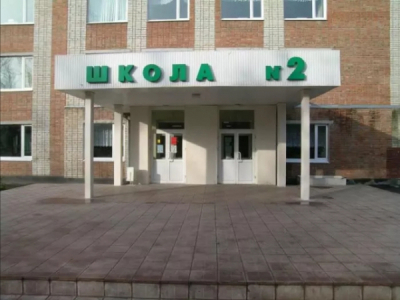
Reporters emailed questions to the practice where Omarchanov has worked, but received no response. It is unclear if Omarchanov still works there, as his name has been covered up on the entrance to the office. In a letter to Gölkel’s lawyer, Omarchanov said Gölkel’s operation went “without complications."
The Norwegian health board reviewed Omarchanov’s treatment of eight patients, and alleged that he had exposed them “to a disproportionate risk and caused irreversible harm to many of them.”
One patient developed pressure ulcers and suspected sepsis, resulting in the amputation of his lower leg. While a Norwegian court acquitted the doctor of gross negligence in 2022, it also concluded that he had acted "negligently and irresponsibly" towards his patients.
It was only after the surgery that Gölkel stumbled on an article online in which the Norwegian patient, Finn Åge Olsen, described the ordeal of losing a part of his leg after being operated on by the same doctor.
"I’m still very grateful to him for sharing his story," said Gölkel. "Without him, I would never have become aware of [Omarchanov’s history].”
Via his attorney, Gölkel contacted the South Württemberg Medical Association and requested a review of Omarchanov’s professional practice. But the medical chamber, which oversees professional conduct, said it "saw no reason" to request a statement from the doctor.
Four years before the chamber made that decision, Norwegian health authorities had contacted the German Embassy in Oslo about the license revocation (Omarchanov holds German citizenship).
"It leaves me incredibly speechless and angry," Gölkel told ZDF frontal.
Norwegian authorities also filed an alert with the European Union’s IMI system, which is meant to flag disciplined doctors to health agencies.
Journalists have obtained data that exposed major gaps in the IMI system. Alert records indicate that only one third of member states open the warnings sent through the IMI system, OCCRP and partners reported last month.
For Germany, access to the system is decentralized, with each of the 16 states responsible for its own access to the alerts.
An analysis of 2024 IMI records found that nine German states did not open any of the nearly 500 warnings, and only two of the states accessed nearly all the alerts.
The German Federal Office of Administration, the national IMI coordinator, confirmed that there are no binding guidelines for handling warning notifications in the country.
State authorities, meanwhile, told reporters that the warning notifications are checked during licensing procedures for foreign doctors, but if there is not an exact name match the warning can be missed. And doctors who already have a license in Germany when a warning is issued could slip through the cracks.
German medical associations and the federal government’s Commissioner for Patients’ Affairs have also acknowledged to ZDF that there are structural deficiencies in patient protection. They have called for a nationwide register in which all professional disciplinary measures could be centrally recorded.
However, it’s unclear whether any of these changes would have prevented the issues with Gölkel’s treatment, which the statutory health insurance company called “grossly negligent.”
Records show that the authorities in Bavaria had accessed the Norwegian IMI alert. Omarchanov then moved to Baden-Württemberg, where the Stuttgart licensing authority decided against revoking his license. The authority said revocation “is always a legal last resort.”
Автор: Мария Шарапова